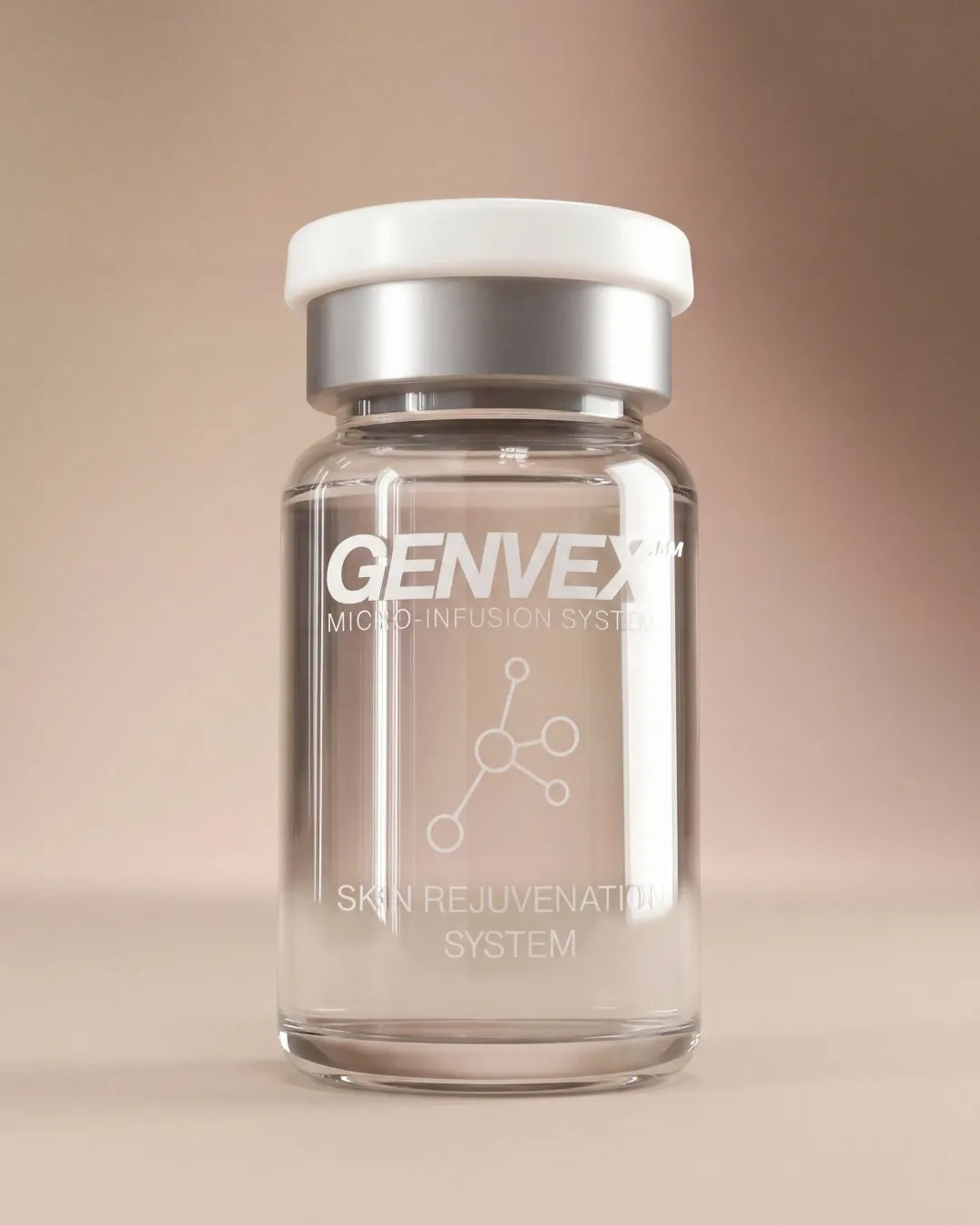





Skin Micro-Infusion Peptide System - GHK-Cu 0.05%
Clinic-level skin renewal. At home.
Improve texture, tone and visible signs of ageing in just weeks.
Professional treatments often cost $150–$300 per session
GENVEX: From $31 NZD per treatment
- ✓ 1 reusable applicator + 3 full treatments included
- ✓ One treatment every 7–10 days (≈ 30 days per kit)
- ✓ Simple at-home routine, no downtime
*Based on a consumer study of 78 GENVEX™ users


Try risk-free with our 60-day money-back guarantee under 1% of customers request a refund.
"Most skincare never reaches where your skin actually needs it. GENVEX delivers peptides deeper - helping improve texture, tone and visible signs of ageing from within."
Description
Most skincare stops at the surface.
That’s why results are often slow or don’t last.
GENVEX uses precision 0.5mm micro-infusion to help deliver active ingredients deeper, where meaningful support begins.
The result:
Smoother, firmer, more luminous-looking skin over time.
Not surface hydration.
Precision-delivered renewal.
Commit to 90 days for optimal results.
How To Use
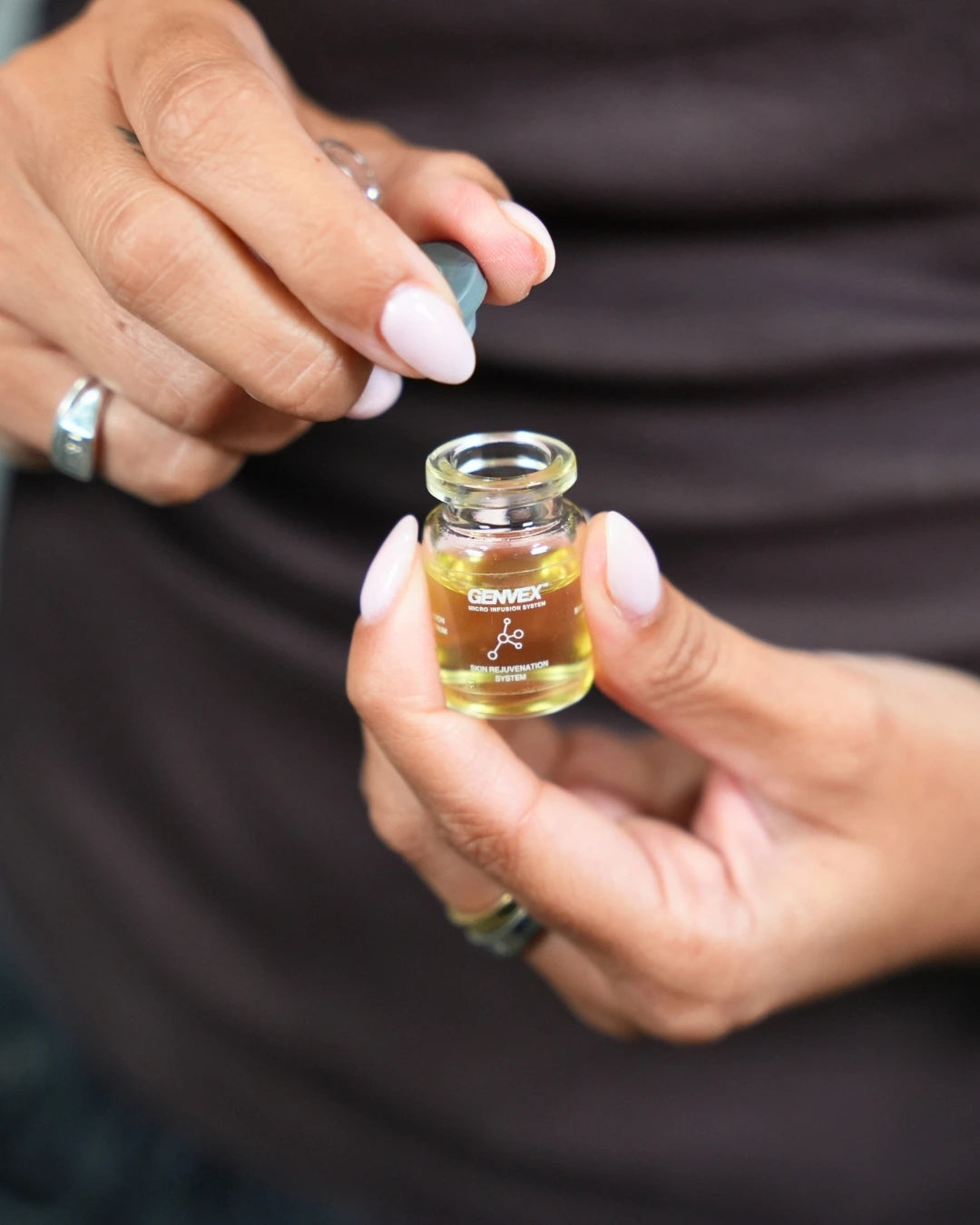
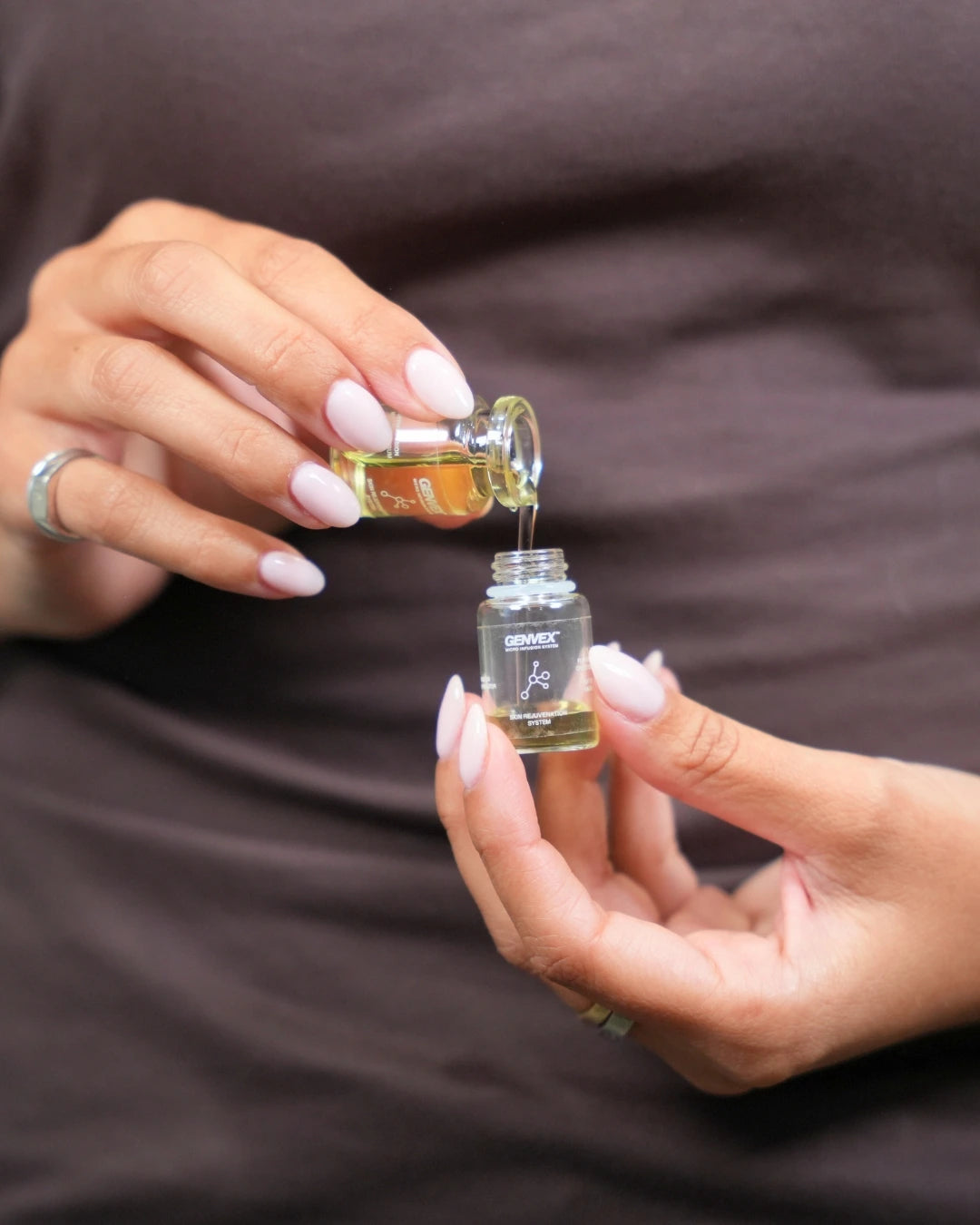
- Open the serum vial and pour the contents into the applicator.
- Use on clean skin, ideally after freshly washed and dried face.
- Gently stamp the applicator across the entire face, completing two passes.
- If any serum remains, apply it directly to the scalp and massage in.
- After use, wash the applicator thoroughly and allow it to dry before storing.
Ingredients
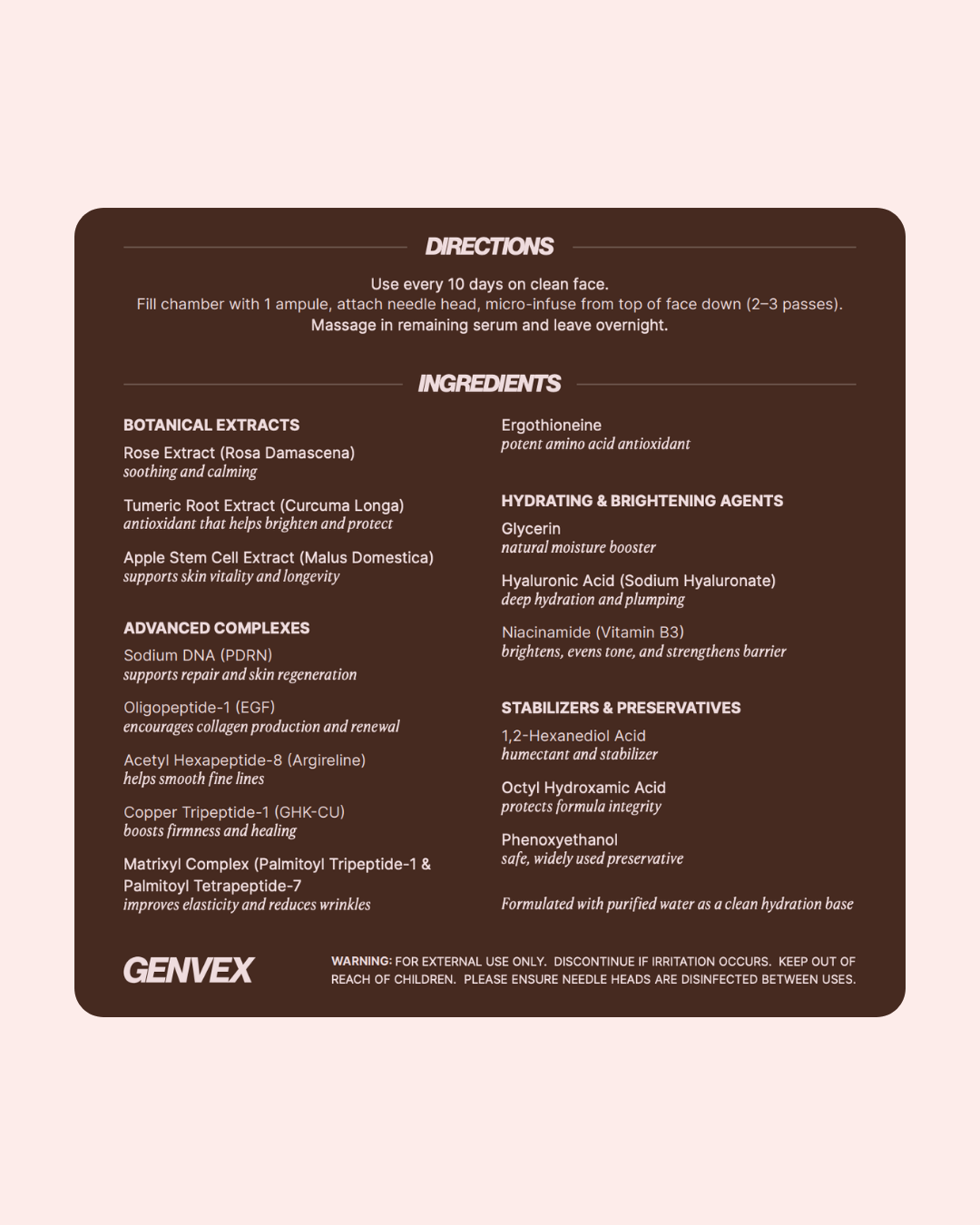
PDRN (Sodium DNA) 0.5% – Supports skin regeneration, helping improve texture, resilience, and overall skin quality.
Copper Tripeptide-1 (GHK-CU) 0.05%– boosts firmness and healing
Niacinamide (Vitamin B3) 4% – brightens, evens tone, and strengthens barrier
Hyaluronic Acid (Sodium Hyaluronate) 3.5% – deep hydration and plumping
Purified Water, Glycerin, 1,2-Hexanediol, Hyaluronic Acid, Vitamin B3, Sodium DNA, Oligopeptide-1 , Ergothioneine, Rose Extract, Turmeric Extract, Apple Stem Cell, Acetyl Hexapeptide-8 , Copper Tripeptide-1 , Palmitoyl Tripeptide-1 & Palmitoyl Tetrapeptide-7 , Octyl Hydroxamic Acid, Phenoxyethanol.
Warning: For external use only. Keep out of reach of children. Discontinue use if irritation occurs. Avoid contact with eyes. Do not use on areas of the scalp with broken or irritated skin.
What’s Included
3× GHK-Cu Peptide Serum Vials
1× Precision Micro-Infusion Applicator
Skin Micro-Infusion Peptide System - GHK-Cu 0.05%
If you have any questions, you are always welcome to contact us. We'll get back to you as soon as possible, within 24 hours on weekdays.
-
Shipping Information
Use this text to answer questions in as much detail as possible for your customers.
-
Customer Support
Use this text to answer questions in as much detail as possible for your customers.
-
FAQ’s
Use this text to answer questions in as much detail as possible for your customers.
-
Contact Us
Use this text to answer questions in as much detail as possible for your customers.

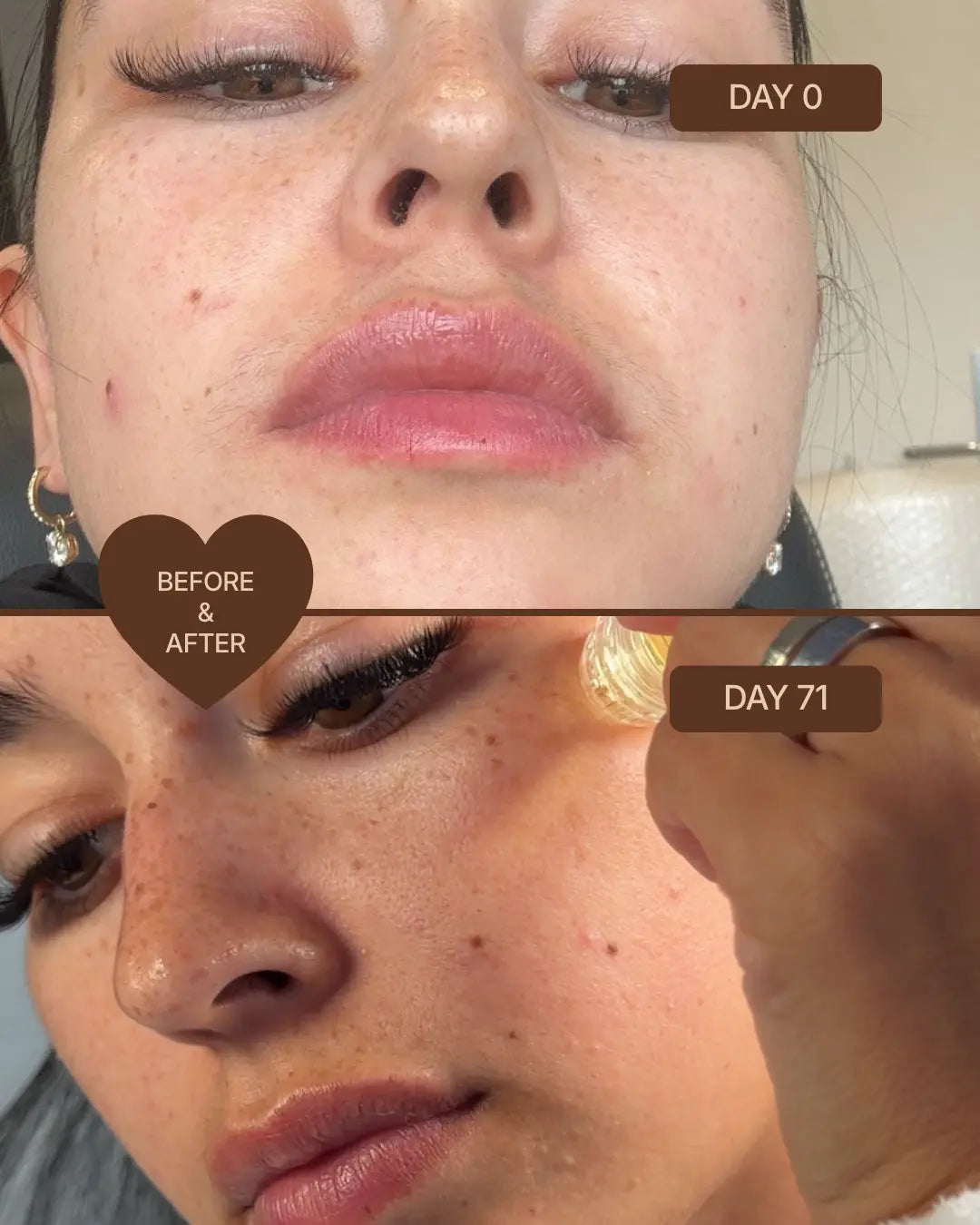
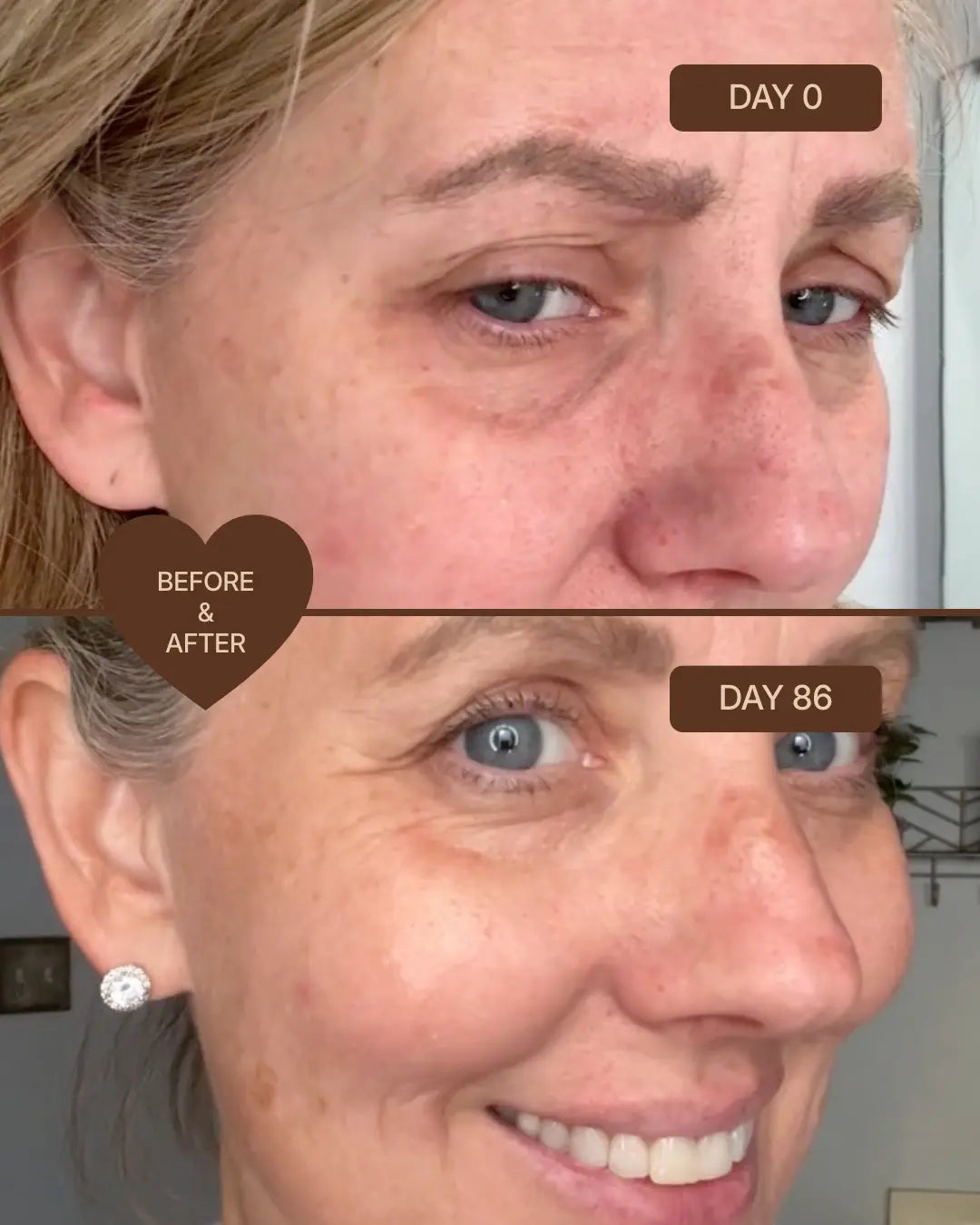
Results Worth Posting About

Age: 27 after 71 days

Age: 51 after 86 days

Age: 25 after 59 days

Age: 31 after 91 days

Age 33: after 58 days

Why most skincare never works
Most products sit on the surface. That’s why results are slow (or non-existent).
Micro-infusion changes that.


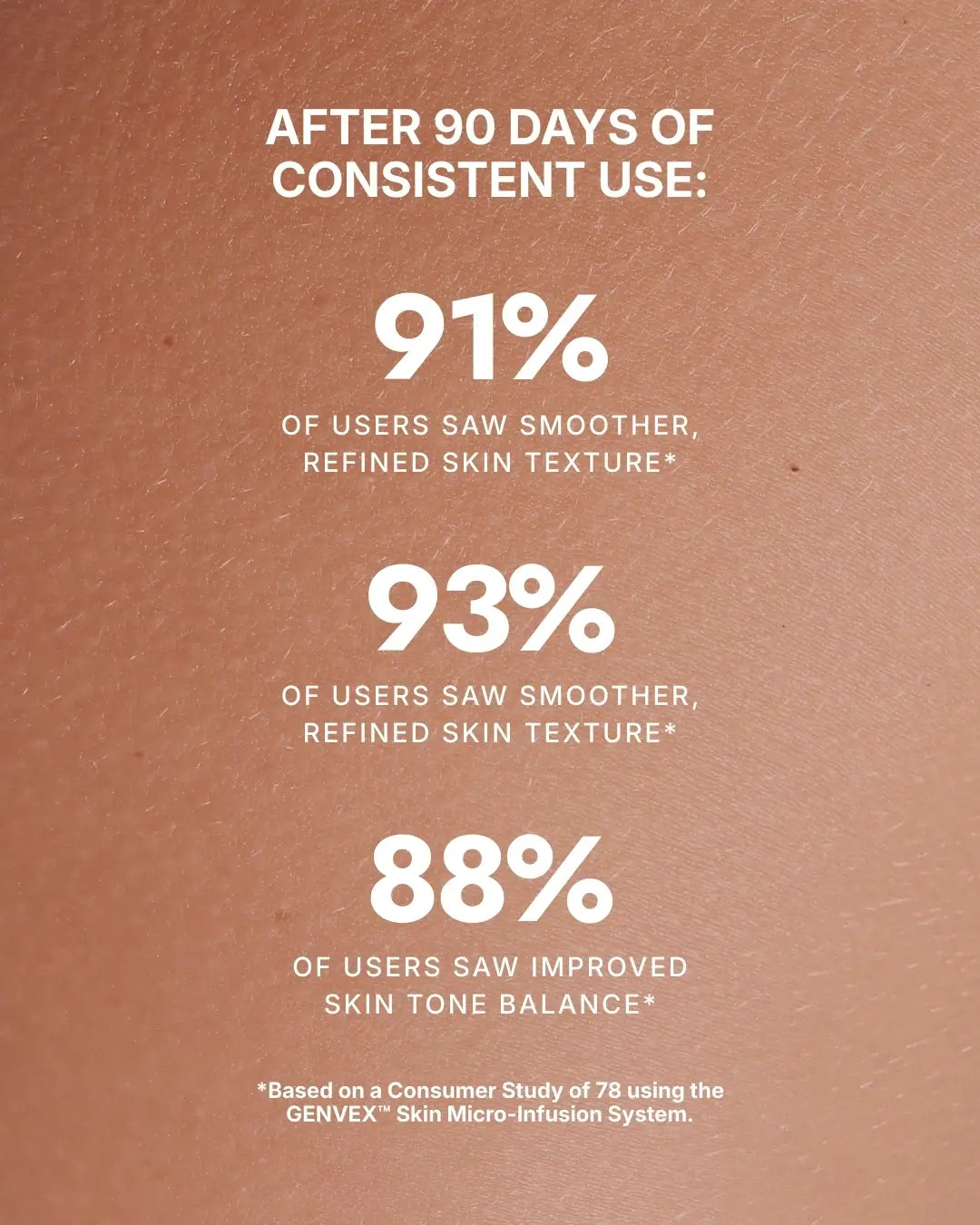
AFTER 90 DAYS OF CONSISTENT USE:
OF USERS SAW SMOOTHER, REFINED SKIN TEXTURE*
OF USERS SAW IMPROVED SKIN TONE BALANCE*
OF USERS NOTICED VISIBLE IMPROVEMENT IN FINE LINES*

Powered by clinically recognised ingredients
0.5% PDRN
Supports skin regeneration and helps improve overall texture and resilience.
0.05% Copper Peptide (GHK-Cu)
Supports collagen integrity and skin recovery.
4% Niacinamide
Brightens, balances, and reinforces barrier strength.
3.5% Hyaluronic Acid
Delivers deep hydration for smoother texture and visible plumpness.
Formulated with high-strength, clinically aligned concentrations — precision-delivered for results beyond the surface.


Transform yourself in 90 days
With consistent use, most customers begin noticing progressive improvements over time.
Skin feels more hydrated and refreshed
Active ingredients begin supporting your skin barrier and hydration levels, helping skin feel softer, smoother, and more balanced.
Healthier-looking skin tone and texture
Many users begin noticing improvements in overall skin appearance, including smoother texture and a more even-looking tone.
Visible skin refinement
With continued use, skin often appears clearer, smoother, and more radiant as ingredients support ongoing skin renewal.
Why most skincare fails
Traditional skincare
GENVEX
How it works (and why it works better)
Instead of sitting on your skin, this system helps deliver active ingredients deeper — where real change happens.

FAQs
What is Genvex Skin?
Genvex Skin is a micro-infusion facial system designed to support skin health and improve the appearance of smoother, healthier-looking skin. It delivers targeted ingredients directly to the dermis to support skin strength and resilience at the cellular level.
How often do I use it?
GENVEX Skin is designed to be used once every 10 days. Consistent use supports visible renewal over time — without overworking the skin.
How long until I see results?
Most users notice a healthy glow and plumper skin after the first session. For concerns like fine lines, dark spots, or scars, visible improvements typically appear after 6–12 treatments. Consistency is key - results build over time.
Is it safe for sensitive skin?
Yes. The sterile, single-use heads ensure each treatment is hygienic, and our serums are formulated for sensitive skin. Unlike harsh peels or lasers, micro-infusion doesn’t strip or irritate - it works with your skin barrier, not against it. If you have skin conditions - like starting any treatment, we recommend consulting your doctor before use.
Does it hurt?
You may feel a mild tingling or light pressure during application. This is normal and typically subsides quickly. The treatment should not be painful when used correctly. Users report a 2/10 level of pain, similar to a light scratch.
Do I use it on wet or dry skin?
For best results, use Genvex Skin on clean, dry skin after washing your face.
Why isn’t GENVEX Skin blue if it contains GHK-Cu?
Pure GHK-Cu (copper peptide) in high raw concentrations has a naturally blue tone. However, final product colour depends on overall formulation, dilution, and stabilisation.
GENVEX uses a precisely calibrated 0.05% GHK-Cu concentration within a balanced peptide system. At this level — and within our stabilised base — the formula does not appear bright blue.
Colour intensity is not an indicator of potency. Concentration, stability, and delivery are.
What makes Genvex Skin different?
Genvex Skin focuses on supporting skin health and collagen production at the dermal level using a targeted micro-infusion approach. Rather than daily treatments or heavy topical layering, it's designed for low-effort, consistent use.
Is Genvex Skin suitable for women and men?
Yes. Genvex Skin is designed for all genders and most skin types.
Can I use it with my normal skincare routine?
Absolutely. You can continue with your cleansers, moisturizers, and sunscreens as usual. In fact, micro-infusion can make your skincare routine more effective by improving absorption.
How often do I need to use it?
We recommend once every 10 days. That’s enough time for your skin to recover and maximize results, without needing daily effort. It’s a simple, sustainable routine.
Will it work for wrinkles, scars, or pigmentation?
Yes. The device is designed to address multiple skin concerns: softening fine lines, smoothing texture, fading dark spots, and restoring radiance. Results vary by person, but our customers have seen improvements across all of these areas.
Is it safe to do at home?
Yes. The applicator is engineered for safe at-home use. It’s a professional method simplified into a routine you can confidently perform yourself.
Choose your system
Targeted systems built around one principle: support your biology, don’t fight it.